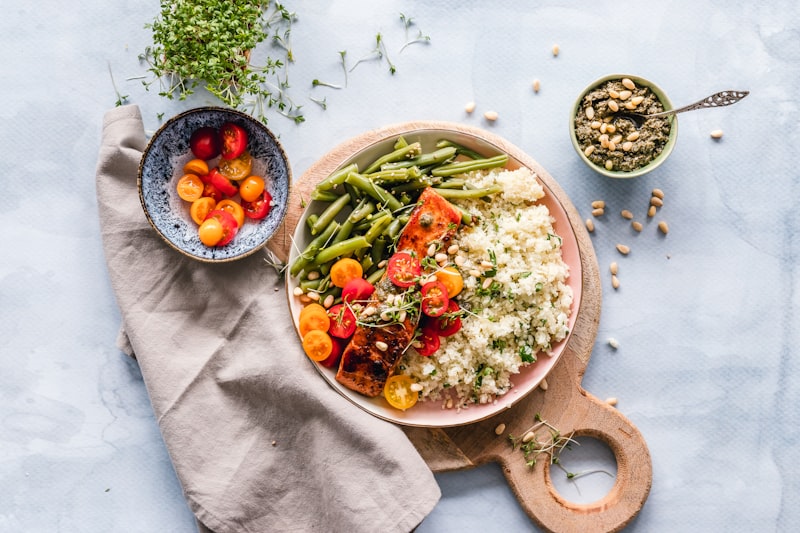
If you've landed here because you've just had your gallbladder out, welcome — you're in the right place. And if you've landed here simply wanting to eat lighter and shift some weight, you're also in the right place. A low-fat diet is one of the most approachable ways to eat for both goals, and it doesn't have to mean bland, joyless food. Done well, it's just smart, satisfying eating that happens to be gentler on your digestion and your waistline.
This guide walks you through what a low-fat diet actually means, why it matters (particularly if you're recovering from gallbladder surgery), which South African foods to lean into and which to go easy on, a sample day of eating, and some practical tips for making it stick — braais, biltong and all.
A friendly note: We're not doctors, and this page isn't medical advice. If you're eating low-fat because of a gallbladder condition, gallbladder removal, pancreatitis or another medical issue, please follow the specific guidance from your surgeon, GP or a registered dietitian — they know your situation and can tailor fat targets to you. This guide is general, practical information to support that.
What Is a Low-Fat Diet?
A low-fat diet simply means reducing the proportion of your daily kilojoules that come from fat, particularly saturated fat, while still eating enough overall to feel satisfied. Fat is the most energy-dense nutrient — it has roughly 37 kJ per gram, compared to about 17 kJ per gram for protein or carbohydrate — so trimming fat is often the fastest way to bring your total kilojoule intake down without needing to shrink your portions dramatically.
In practice, that means:
- Choosing lean cuts of meat and skinless chicken instead of fatty cuts
- Grilling, baking, steaming or air-frying instead of deep-frying
- Swapping full-cream dairy for low-fat or fat-free versions
- Going easy on oil, butter, mayonnaise and creamy sauces
- Building meals around vegetables, whole grains and legumes, with fat used sparingly as a flavour finisher rather than a base ingredient
A low-fat approach isn't about eliminating fat entirely — some fat is essential for absorbing vitamins A, D, E and K and for keeping hormones and cell membranes healthy. The goal is balance: enough healthy fat to function well, without the excess that piles on kilojoules or overwhelms a sensitive digestive system.
Why a Low-Fat Diet Matters
For Weight Loss
Because fat is so kilojoule-dense, cutting back on fried foods, fatty takeaways and creamy extras is one of the more forgiving ways to create the kilojoule deficit needed for weight loss — you can often eat a satisfying volume of food (vegetables, lean protein, whole grains) while still reducing total energy intake. It pairs naturally with our kilojoule-controlled diet plans if you want more structure.
After Gallbladder Removal
If you've recently had a cholecystectomy (gallbladder removal), this is likely why you're here — and for good reason. Your gallbladder used to store bile and release it in a concentrated burst whenever you ate fat, making fat digestion efficient. Without it, bile drips continuously into your gut at a lower, steady rate. Large fatty meals can outpace that supply, leading to bloating, cramping, urgency or diarrhoea. Keeping meals lower in fat — especially in the weeks and months after surgery — is one of the simplest ways to stay comfortable while your digestion adapts. For the fuller picture on eating after surgery, see our weight loss after gallbladder removal guide.
For Heart and Metabolic Health
Diets high in saturated fat are linked to higher LDL ("bad") cholesterol, which raises cardiovascular risk over time. The Heart and Stroke Foundation South Africa recommends limiting saturated fat and choosing unsaturated fats (olive oil, avocado, nuts, oily fish) in moderation instead — so a low-fat approach that favours these swaps supports your heart as well as your weight.
Low-Fat Foods to Build Your Plate Around
These are the everyday, affordable staples that make a South African low-fat diet realistic on a normal grocery budget:
Lean Proteins
- Skinless chicken breast and turkey — grilled, baked or in a potjie without added oil
- Hake, kingklip, tuna in water, or snoek grilled rather than fried — Woolworths, Checkers and Pick n Pay all stock affordable frozen hake portions
- Lean biltong in moderate portions — a good high-protein, low-fat snack when the cut is lean
- Eggs (whole eggs in moderation, unlimited egg whites)
- Lentils, sugar beans, chickpeas and split peas — cheap, filling, and naturally low in fat
- Low-fat cottage cheese and fat-free plain yoghurt
Vegetables and Fruit
- Any fresh or frozen vegetables — butternut, spinach, cabbage, carrots, green beans, tomatoes
- Fresh fruit as a snack instead of chips or pastries — apples, naartjies, bananas
- Rooibos tea (naturally caffeine-free and fat-free) as your go-to warm drink
Whole Grains and Starches
- Brown rice, samp, whole-wheat pap, oats
- Wholegrain or seeded bread instead of white, and go light on the butter or margarine
- Sweet potato — roasted with minimal oil rather than deep-fried
Foods to Limit or Avoid
- Fried and deep-fried foods: slap chips, fried chicken, vetkoek — all high in absorbed oil
- Fatty meat cuts: boerewors, lamb chops, pork belly, beef brisket, chicken skin
- Full-cream dairy: cream, full-cream milk, regular cheese, butter — swap for low-fat or fat-free versions
- Takeaways and fast food: burgers, pies, fried fish and chips shops — often hide large amounts of fat even in savoury, non-obvious dishes
- Creamy sauces, mayonnaise and salad dressings: easy to overdo — try a squeeze of lemon, herbs, or a vinaigrette made with a teaspoon of olive oil instead
- Pastries, chips and processed snacks: often combine fat and sugar, making them very kilojoule-dense for the volume you get
Tip: Check nutrition labels for "total fat" and "saturated fat" per 100g. As a rough guide, under 3g total fat per 100g is considered low-fat, and under 1.5g saturated fat per 100g is low in saturated fat. Most South African supermarket own-brand ranges (Woolworths, Checkers, PnP) now clearly label low-fat and fat-free options.
A Sample Day of Low-Fat Eating
| Meal | Example |
|---|---|
| Breakfast | Oats made with low-fat milk, topped with banana and a sprinkle of cinnamon; rooibos tea |
| Mid-morning snack | Fat-free yoghurt with a handful of berries or an apple |
| Lunch | Grilled chicken breast with brown rice and steamed green beans and carrots |
| Afternoon snack | Carrot and cucumber sticks with a small tub of low-fat cottage cheese |
| Dinner | Baked hake with roasted butternut and a big side salad with lemon dressing |
| Evening (optional) | Rooibos tea with a small square of dark chocolate |
Practical Tips for Making It Stick
- Cook in batches: Grill or bake a few portions of chicken or fish at once so you're not tempted by fried takeaways during a busy week or load shedding.
- Read labels, not just packaging claims: "Light" doesn't always mean low-fat — check the actual grams per 100g.
- Braai smart: Choose chicken breast, fish or lean cuts over boerewors and fatty chops; load your plate with grilled vegetables and salad rather than potato salad and creamy dips.
- Flavour without fat: Herbs, spices, lemon juice, garlic, chilli and vinegar-based marinades add plenty of flavour without the kilojoules of oil and cream.
- Don't go to zero fat: A little healthy fat (avocado, olive oil, nuts) in moderation helps you absorb nutrients and keeps meals satisfying — especially once your gut has adjusted, if you're post-gallbladder surgery.
- Go slow if you're recovering from surgery: Reintroduce fat gradually and in small amounts, watching how your body responds, rather than jumping back to your old way of eating all at once.
Key takeaway: A low-fat diet doesn't mean flavourless food or constant hunger. Build meals around lean protein, vegetables, whole grains and fruit, use fat sparingly as a finishing touch, and give yourself grace to reintroduce a little healthy fat once your body — and your goals — are ready for it.
Frequently Asked Questions
Is a low-fat diet good for weight loss?
Yes, for many people it's an effective and approachable strategy. Because fat is so kilojoule-dense, cutting back on fried and fatty foods while eating plenty of vegetables, lean protein and whole grains makes it easier to eat a satisfying volume of food while still being in a kilojoule deficit.
Why do I need to eat low-fat after gallbladder removal?
Without a gallbladder, bile drips continuously into your gut instead of being released in a concentrated burst when you eat fat. Large fatty meals can overwhelm that steady supply, causing bloating, cramping or diarrhoea. Lower-fat meals are gentler on your digestion while your body adapts, which can take weeks to months.
How much fat should I eat per day on a low-fat diet?
General guidance for weight loss purposes is often in the region of 40-60g of fat per day, but this depends on your total energy needs. If you're recovering from gallbladder surgery, follow the specific fat targets given by your surgeon or dietitian rather than a general rule.
Can I still eat biltong and braai food on a low-fat diet?
Lean biltong in sensible portions fits well into a low-fat diet. At a braai, favour chicken breast or fish over boerewors and fatty chops, and go easy on creamy sides like potato salad and coleslaw.
Ready for More Structure?
If you'd like a full 7-day plan built around low-fat, kilojoule-controlled eating, browse our complete diet plans collection. Recovering from gallbladder surgery? Our weight loss after gallbladder removal guide covers the week-by-week eating progression in detail.
Browse Diet Plans